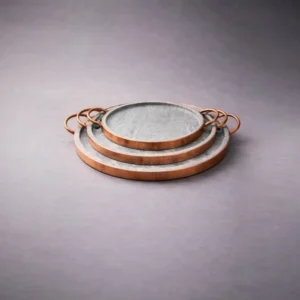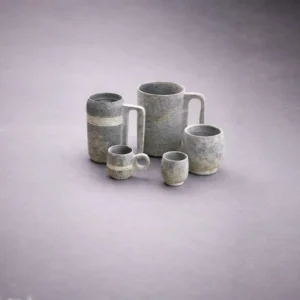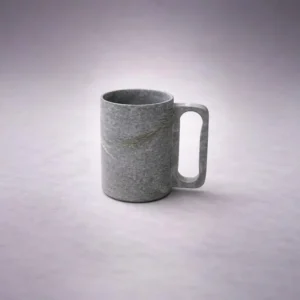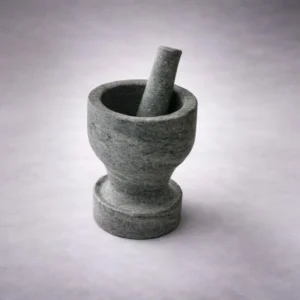


Before the discovery of iron and other metals (in the Stone Age), primitive human beings used to carve stones into vessels, artifacts etc. and employed them for cooking. The color of these vessels varies from lighter to darker shades of gray, green, brown, black, and white. The hand-carved, traditional, versatile Kalchatti is made up of soft soapstone used and treasured since the rise of civilization in India. This soft soapstone is chemically characterized as steatite and mainly composed of talc. Our Indian Kalchatti collection of varying colors, shapes, and sizes are hand made by a small family of artisans from Semmadapatti Artisan Community in Namakkal District. Most of the architectural soapstone is mined from Chile, Brazil, India, and Finland. The Indian Soapstone’s are classified as Palewa and Gorara varieties.
With low dielectric, high temperature resistance, high mechanical strength and high resistance to acids and alkalis, these characteristics have been reflected on the cookware’s application in cooking foods that require longer cooking time over a gentle fire, and sour, acidic, tamarind holding dishes.
Advantages of using Kalchatti
1. Kalchatti can be used for making liquid, gravy-based curries, semi-solid foods, storing and preserving milk, curd, buttermilk, rock salt, tamarind, extracts, pickles, etc.
2. Food cooked in soapstone cookware keeps the natural, authentic, original aroma and taste.
3. Notably, it’s an insulator that acts as a casserole by keeping the food hot for longer durations.
4. Being extremely dense and non-porous, it is impervious to bacterial penetration and prevents the bacterial growth on the surface as well as extends the shelf life of cooked foods.
All soapstone cookware has to be seasoned before its use. The seasoning is done for expedition of natural oxidation leading to uniform darkening of the surface; protection of the internal surface, prevention of extensive erosion during cooking; selective migration of beneficial minerals (Ca, Mg, Fe) into the food and enhancement in durability of soapstone cookware, thus making the surface much denser. With seasoning and usage, the color of soapstone cookware becomes darker, making it heat, acid, alkali, chemical, alcohol, etch, dirt, and stain resistant.
All our products come with handle and care instructions to help first time users. We welcome questions and comments of any kind and will respond as soon as possible.